

 +1-786-272-2672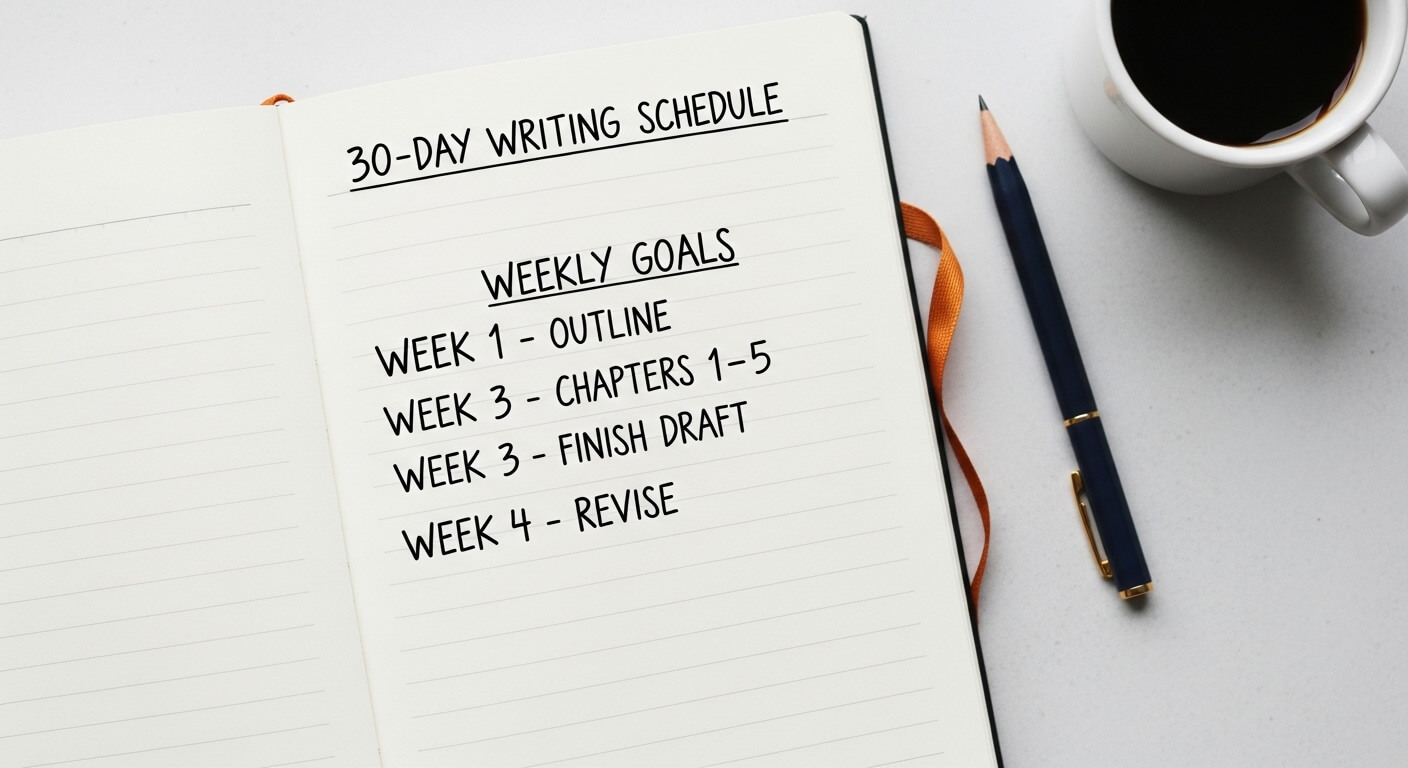
So, you’ve been saying you’ll write that book “someday.” You’ve got an idea swirling in your head, maybe even scribbled in a notebook, but the thought of turning it into 50,000 words? Overwhelming.
Here’s the truth: writing a book doesn’t have to take years. You can do it in 30 days. That’s not hype—it’s focus, strategy, and a little grit. Whether you want to pitch your manuscript to publishers, self-publish it, or hand it off to a ghostwriting agency for fine-tuning, the first step is getting your draft done.
Let’s break it down into a doable, no-stress plan that even first-time authors can follow.
Why Write A Book In 30 Days?
You might be wondering, “Why rush the process? Shouldn’t I take my time?”
Here’s why speed works:
When you write quickly, you stop second-guessing yourself. You silence the inner critic that whispers, “This isn’t good enough.” Writing in 30 days forces you to focus on progress instead of perfection.
And if you’re planning to approach editors or publishers later, they’ll care more about seeing a complete draft than hearing about an idea you never finished. Even ghostwriters, who can polish your draft for you, need something to work with.
So don’t overthink it. Start now.
Step 1: Set Your Target And Build A Writing Habit
A full-length book is around 50,000 words. Divide that by 30 days, and you’re looking at 1,667 words daily.
That might sound intimidating at first, but think of it this way:
- Write 800 words in the morning.
- Add 500 at lunch.
- Finish with 367 before bed.
The key is consistency. Missing one day means doubling your workload the next—and trust me, that’s no fun.
Make writing a non-negotiable part of your day. Treat it like brushing your teeth: not optional.
Here’s a little secret many authors don’t talk about: even seasoned writers lean on editors or ghostwriting agencies when they feel stuck or need help structuring their ideas. But for now, focus on building momentum.
Step 2: Don’t Skip The Outline
Before you dive in, spend a day or two sketching out a loose roadmap for your book. You don’t need a detailed 30-page outline, but you should know:
- How it starts
- Where it’s headed
- How it ends
If you’re writing fiction, jot down key characters, conflicts, and turning points. For nonfiction, map out the chapters and core lessons.
This isn’t about locking yourself in. It’s about giving yourself a breadcrumb trail to follow when you hit a rough patch.
If you’re stuck on structure, an editor or ghostwriting agency can help you build an outline. Many first-time authors hire ghostwriters at this stage to shape their ideas into a framework.
Step 3: Write First, Edit Later
Here’s the golden rule for writing fast: don’t edit as you go.
Your job isn’t to create a masterpiece. It’s to get words on the page. Editing mid-draft will slow you down and drain your creative energy.
Remind yourself: no one—not publishers, not editors, not even a ghostwriter—will see this version unless you want them to. You can polish it later.
So, write messily. Write badly if you must. Just write.
The beautiful thing about writing a fast draft is that it frees you from perfectionism. Later, when you’re ready to refine, professional editors or a ghostwriting agency can help shape your work into something that feels smooth and market-ready.
The Midway Slump (And How To Beat It)
Around day 12 or 15, you’ll hit what writers call “the messy middle.” The excitement of starting has worn off, and the end feels far away.
Here’s how to push through:
- Change your scenery. Write in a café, library, or park.
- Skip hard scenes and come back later.
- Use a timer. Write in short 25-minute sprints with breaks in between.
This phase trips up a lot of authors. But if you keep going, you’ll gain momentum, and finishing will feel inevitable.
It’s also worth noting that many bestselling authors don’t write alone. They rely on editors, proofreaders, and sometimes even ghostwriters to help them stay on track. That’s not cheating—it’s smart collaboration.
Step 4: Keep The Finish Line In Sight
As you hit the final week, stay focused. Don’t stop to revise or second-guess.
Even if the ending feels rushed, just get it down. Remember, editors exist for a reason. So do ghostwriters. A ghostwriting agency can take your raw draft and help shape it into something powerful.
For now, your only job is to finish.
Imagine this: thirty days from now, you could be holding a full draft of your book. You’ll have done something most aspiring authors only dream of.
What Comes After Day 30?
You’ve done it. You’ve written a book in a month. But don’t hit “publish” just yet—there’s still work to do.
1. Take A Breather
Step away from your draft for a few days. Clear your head so you can see it with fresh eyes later.
2. Edit And Revise
Go through your manuscript and clean up obvious errors. If editing isn’t your strength, consider hiring a freelance editor.
3. Work With Professionals
If you want to level up your draft, think about bringing in a ghostwriter or ghostwriting agency. They can rewrite clunky sections, enhance your voice, and make sure your book resonates with readers.
4. Decide How To Publish
Will you self-publish, or send your manuscript to publishers? Either way, a polished draft is key to making a strong impression.
Can You Really Write A Book In 30 Days?
Here’s the truth: it won’t be easy. There will be days you’re tempted to quit. But yes—it’s absolutely possible.
The difference between “aspiring writers” and published authors often comes down to one thing: finishing the draft. And once you’ve done that, you’re already ahead of 90% of people who say they want to write a book but never do.
Even if your first draft isn’t perfect, that’s okay. Editors and ghostwriters can help you shape it later. But first, you have to get the words down.
Final Thoughts: This Is Your Moment
Writing a book in 30 days isn’t about rushing. It’s about proving to yourself that you can do it. Once the draft is complete, you can slow down, edit, and polish it into the book you’ve always dreamed of.
And if you get stuck, remember—you’re not alone. Editors, ghostwriters, and ghostwriting agencies exist to support authors just like you.
So, why not start today? Grab your laptop, block out an hour, and write the first sentence.
Thirty days from now, you could be holding the first draft of your book.
Your story is waiting. Are you ready to tell it?


