

 +1-786-272-2672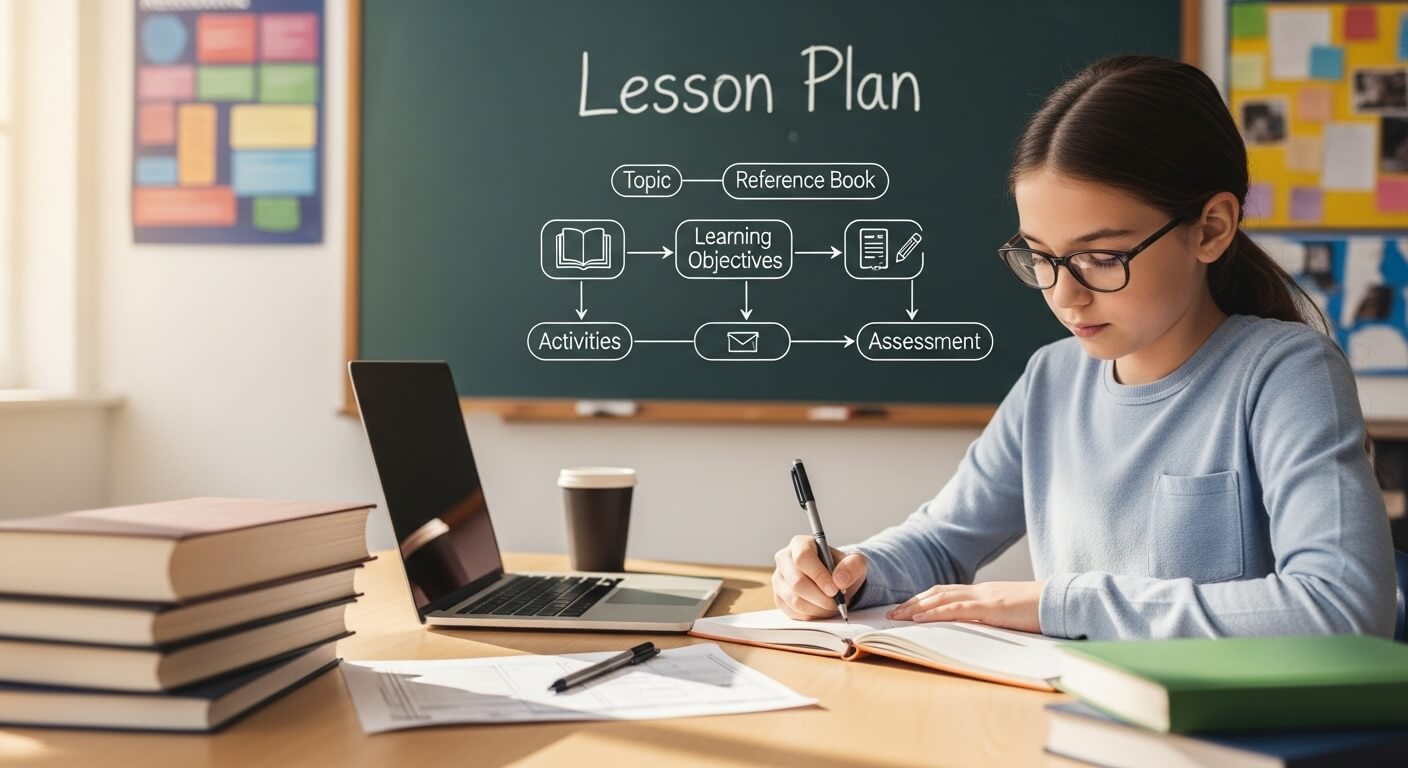
When writing a lesson plan, most of the focus usually goes toward objectives, activities, and assessments. However, one detail that often gets glossed over—but is equally important—is the inclusion of reference books. These sources not only add credibility but also align your content with academic standards.
This guide offers a clear walkthrough on how to write reference books in a lesson plan, with useful formatting tips, examples, and common-sense advice that applies to educators at all levels.
Why Add Reference Books to Your Lesson Plan?
Before jumping into the “how,” let’s look at why this small section plays a big role in successful lesson planning.
· Ensuring Accuracy and Relevance
Listing reference books ensures that your lesson is grounded in authentic, validated information. Whether you’re teaching historical events, scientific processes, or grammar rules, students benefit when lessons are based on credible sources.
· Supporting Curriculum Alignment
In many schools, especially those under state, federal, or national boards, using officially approved textbooks is mandatory. Including reference books signals that your lesson meets the required educational standards.
· Helping Students and Other Educators
Well-listed references provide students with resources for self-study and also help other teachers (like substitutes or co-instructors) understand what you’re teaching and why.
Where Should Reference Books Appear in a Lesson Plan?
Most lesson plan formats include a space near the end under sections like:
- Instructional Materials
- Resources Used
- Bibliography
- Reference Books
If your lesson plan template doesn’t have a designated section, you can place the references after your activities or before your assessment criteria. What’s important is clarity and accessibility.
How To Write Reference Books in a Lesson Plan – Step by Step
Here’s a simple method to follow when including references in your lesson plans.
1. Start With Your Objective
Clarity begins with knowing your learning objective. The topic you’re teaching determines the reference materials you’ll need.
For example:
- Objective: Teach students about the phases of the Moon
- Reference Book: Science for Class 6 – NCERT
When your objective is well-defined, selecting relevant material becomes easier and more effective.
2. Choose Books That Match Curriculum and Grade Level
Not all books are suitable for every classroom. Make sure your chosen materials are:
- Aligned with your country or school’s official curriculum
- Written at an appropriate reading level
- Accurate and up-to-date
- Easy to navigate for both students and instructors
For example, if you’re working with secondary students in India, NCERT books are often the go-to. For U.S. schools, references should align with Common Core or Next Generation Science Standards.
This step mirrors some of the planning techniques discussed in this article about organizing content clearly and consistently across stages of a long-term project.
3. Use a Consistent Reference Format
Even if it’s just a short list, following a structured format makes your references look polished and professional. A common format includes:
- Author(s)
- Title of the book (italicized or underlined)
- Edition (if applicable)
- Publisher
- Year of publication
Example:
Reece, J. B., & Campbell, N. A. (2017). Biology (11th ed.). Pearson Education.
Simplified for younger levels:
Oxford Reading Tree – Stage 5, Roderick Hunt & Alex Brychta, Oxford University Press.
4. Keep It Concise But Useful
There’s no need to write a full bibliography. Two or three solid references are often enough. Keep the list clean, preferably in bullet points or a simple table format, so anyone reviewing your plan can quickly understand which materials you’ve used.
5. Match With Approved Educational Resources
Some schools require teachers to use specific textbooks. If that’s the case, list those books first, followed by any supplemental materials you personally find useful.
Referencing officially sanctioned materials avoids issues with audits or administrative reviews. Plus, it ensures students are studying the content they’ll be assessed on.
For a broader look at structuring knowledge-based content, this ghostwriting services overview sheds light on planning for clarity and compliance.
6. Label Books for Student vs. Teacher Use
Sometimes, the teacher uses more advanced or in-depth materials than the students. If so, consider labeling the references to clarify their purpose.
Example:
Teacher Reference: Bruner, J. (1966). Toward a Theory of Instruction. Harvard University Press
Student Reference: NCERT Science Textbook – Class 6
This small distinction makes your lesson plan clearer for anyone reviewing or borrowing it.
Sample Lesson Plan Reference Section
Let’s bring it all together with a quick example.
Subject: Science
Topic: Photosynthesis
Grade Level: 6
Reference Books:
- Science Voyage – Class 6, Nirmala Gupta, Oxford University Press
- Biology for Middle School, Karen Arms, Holt McDougal
- Reece, J. B., & Campbell, N. A. (2017). Biology (11th ed.). Pearson Education
- National Geographic Kids – www.kids.nationalgeographic.com
Tips for Writing Strong References
Here are a few tips to fine-tune your lesson plan’s reference section.
· Include Edition Numbers When Possible
Textbooks get updated frequently, especially in subjects like Science and Economics. Including the edition number prevents confusion when referencing page numbers or chapter titles.
· Only Use Sources You’ve Read
Make sure to only include books you’ve actually used to prepare your lesson. This keeps your content accurate and avoids unnecessary confusion.
This mirrors the process of factual consistency discussed in one of the recent articles on ghostwriting timelines, where consistency directly affects overall structure and delivery.
· Consider Digital Sources (If School Policy Allows)
If your institution allows it, adding digital resources like websites or eBooks can enrich your lesson plan. However, make sure they come from trusted organizations and are accessible to students.
· Keep the Language Student-Friendly
Avoid overloading the reference section with dense academic language, especially if students will be reading these books. Use grade-level vocabulary and familiar book names.
Common Mistakes to Avoid
Even experienced teachers sometimes misstep when listing reference materials. Here are a few pitfalls to steer clear of:
- Using outdated editions
- Referencing unrelated or off-topic books
- Copy-pasting references from the internet without verifying them
- Skipping references altogether
- Forgetting to update materials each academic year
When Should You Update Your References?
Review and refresh your reference list at key points throughout the academic cycle:
- At the start of each school year
- When textbook editions are updated
- If your curriculum framework changes
- When students or administrators request new materials
Final Thoughts
Adding reference books to your lesson plan isn’t just about checking a box — it’s about improving the quality and clarity of your teaching. Students benefit from knowing where their information is coming from, and colleagues benefit from understanding the structure of your lesson at a glance.
Whether you’re just getting started with formal lesson planning or have years of experience, taking time to select appropriate, accurate reference materials can make a real difference.
Educators working on larger instructional materials, like manuals or guides, often face similar challenges — from outlining to consistency. If you’re curious about what that long-form process looks like, this post on staying organized through the writing process breaks it down clearly and helps build a strong foundation for content planning.


