

 +1-786-272-2672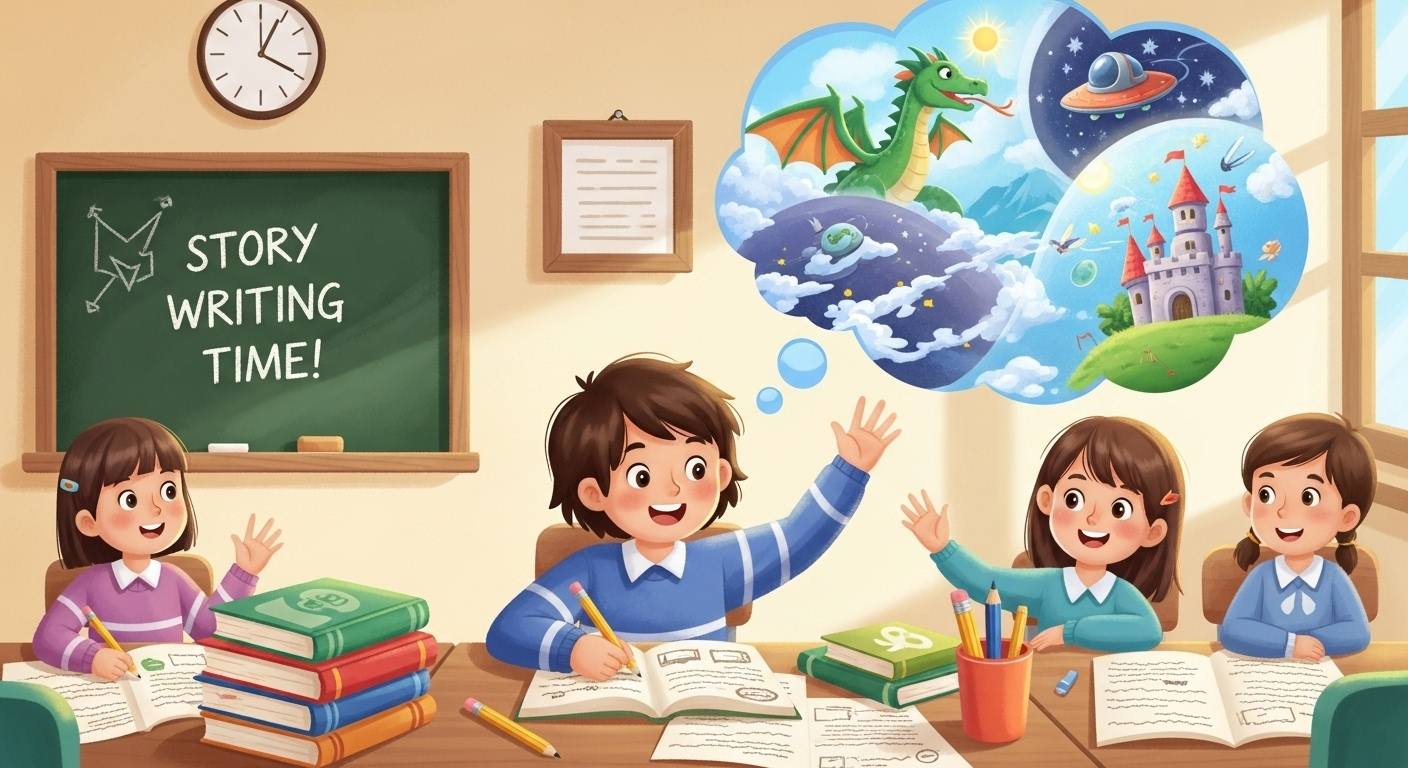
Writing a story when you’re in Class 5 should feel like stepping into a world of adventure. Whether you’re dreaming up magical lands, silly characters, or mysterious forests, writing is your chance to become the author of your own universe. So how do you start? What makes a story fun, clear, and full of imagination?
Let’s walk through it step by step—with tips, examples, and a touch of storytelling magic.
Understanding the Basics of a Story
Before you put pencil to paper, it’s important to understand what makes a story… well, a story! All great stories have three major parts:
1. Beginning – Set the Scene
Start by introducing your main character and the place they live. Maybe it’s a boy named Arham who finds a talking map in his schoolbag. Or maybe it’s a girl named Aisha who lives in a village full of friendly cats. The beginning tells us who the story is about and where it happens.
Use descriptive words to paint pictures in the reader’s mind. Instead of saying, “It was a big tree,” try “It was a towering oak tree with leaves that shimmered like emeralds in the sun.”
2. Middle – The Adventure Begins
This is where the action happens. The middle of your story shows what problem or challenge the main character faces. Maybe Arham follows the map and gets lost in a cave, or Aisha discovers the cats are hiding a secret.
This is where readers start turning pages faster. To keep them hooked, add twists and turns. Let something surprising happen that makes your story exciting!
3. Ending – Wrap It Up
Every story needs a good ending. It can be happy, sad, or a little mysterious—but it should answer the big question: What happened in the end?
Did Arham escape the cave and return home? Did Aisha solve the cat mystery and become the village hero?
A satisfying ending leaves readers smiling—or thinking.
For more guidance on wrapping up your story like a pro, check out this blog on tips to write your book from start to finish.
Step-by-Step: How to Write Your Story
Now that we know the structure, let’s break it down into simple steps for writing your own story.
Choose a Catchy Title
A good title grabs attention right away. Imagine a story called “The Pencil That Drew the Future.” Wouldn’t you want to read it? Your title should hint at the adventure but still leave a bit of mystery.
Decide Your Characters
Your main character (or characters) will carry the story. Give them names, traits, and goals. What do they want? What are they scared of? This helps readers connect. You can also include side characters like friends, family members, or talking animals.
Pick the Setting
Where does your story happen? It could be a real place (like your school or city) or an imaginary world (like a chocolate island or a sky kingdom). Use your five senses—describe what the place looks, smells, sounds, and feels like.
Think of a Problem or Goal
Without a problem, your story won’t have excitement. Maybe your character loses something, faces a bully, or finds a mystery. The goal could be to win a race, find treasure, or help someone in need.
Start Writing!
Now comes the fun part—bringing everything to life! Start with an exciting first sentence. For example:
“As soon as Sana opened the old book, a golden light pulled her inside.”
That’s a hook! It makes readers curious. Keep your sentences clear and exciting, and don’t be afraid to use your imagination.
Tips to Make Your Story Shine
· Use Action Words
Instead of writing “Ali walked slowly,” you could say “Ali tiptoed through the silent hallway.” The second one makes readers feel like they’re in the scene.
· Add Dialogues
When characters speak, the story feels alive. Like this:
“Did you hear that?” whispered Hina.
“It’s just the wind,” replied Hamza, though his voice shook.
Dialogues also reveal how characters feel.
· Show Emotions
Make your characters laugh, cry, shout, or shiver. Readers want to feel what your characters feel. If your character is scared, describe their sweaty palms or racing heart.
Want help making your story more emotional and relatable? You can explore professional ghostwriting assistance from the experts who understand the art of storytelling:
Hire a children’s book ghostwriter
Common Mistakes to Avoid
Even great storytellers need to be careful of small things. Here are a few:
- Don’t skip the ending. Many young writers start strong but forget to finish.
- Avoid repeating words. Try to use new words to keep your story fresh.
- Stick to your main idea. Don’t jump around too much or add too many characters—it might confuse readers.
You can also get help polishing your draft through professional book editing services to make sure your story flows beautifully.
Fun Story Starters for Class 5 Students
If you’re not sure how to begin, here are some story starters to get your imagination rolling:
- “The day my school disappeared…”
- “I woke up with wings on my back…”
- “In the attic, I found a photo that moved…”
- “My dog started talking—and wouldn’t stop!”
These openers spark curiosity. Once you’ve started, the story will unfold naturally.
Practice Makes Perfect
Remember, nobody writes a perfect story the first time. Even famous authors rewrite their stories many times. So don’t be afraid to fix your sentences, change your words, or even try a new ending. Writing is a journey, and every story helps you become better.
If you’re ever stuck, or want help turning your idea into a full book, consider checking out this helpful guide on how to write a story for a novel from the experts at Bestseller Ghostwriting.
Why Writing Stories Is a Superpower
Writing helps you become more creative, better at explaining your thoughts, and even a better reader. Plus, when your classmates, teachers, or parents read your story and smile, you feel proud. You realize your words have power. And who knows? This might just be the first step in becoming a real author.
If you’ve got a special story you want to turn into a full book, you can always reach out to professional ghostwriting services. Explore their book publishing services and learn how your school stories can become books of your own!
Final Thoughts
Writing a story for Class 5 isn’t about being perfect. It’s about having fun, using your imagination, and learning how to express your ideas. Whether you’re writing about pirates, robots, unicorns, or your real-life experiences, remember: Your story matters.
So, grab your notebook, let your ideas run wild, and start writing today. Who knows—you might just write the next best children’s story!
If you’re serious about improving or getting your story ready for publishing, don’t miss out on the children’s book writing guide packed with real author tips and insights.


