

 +1-786-272-2672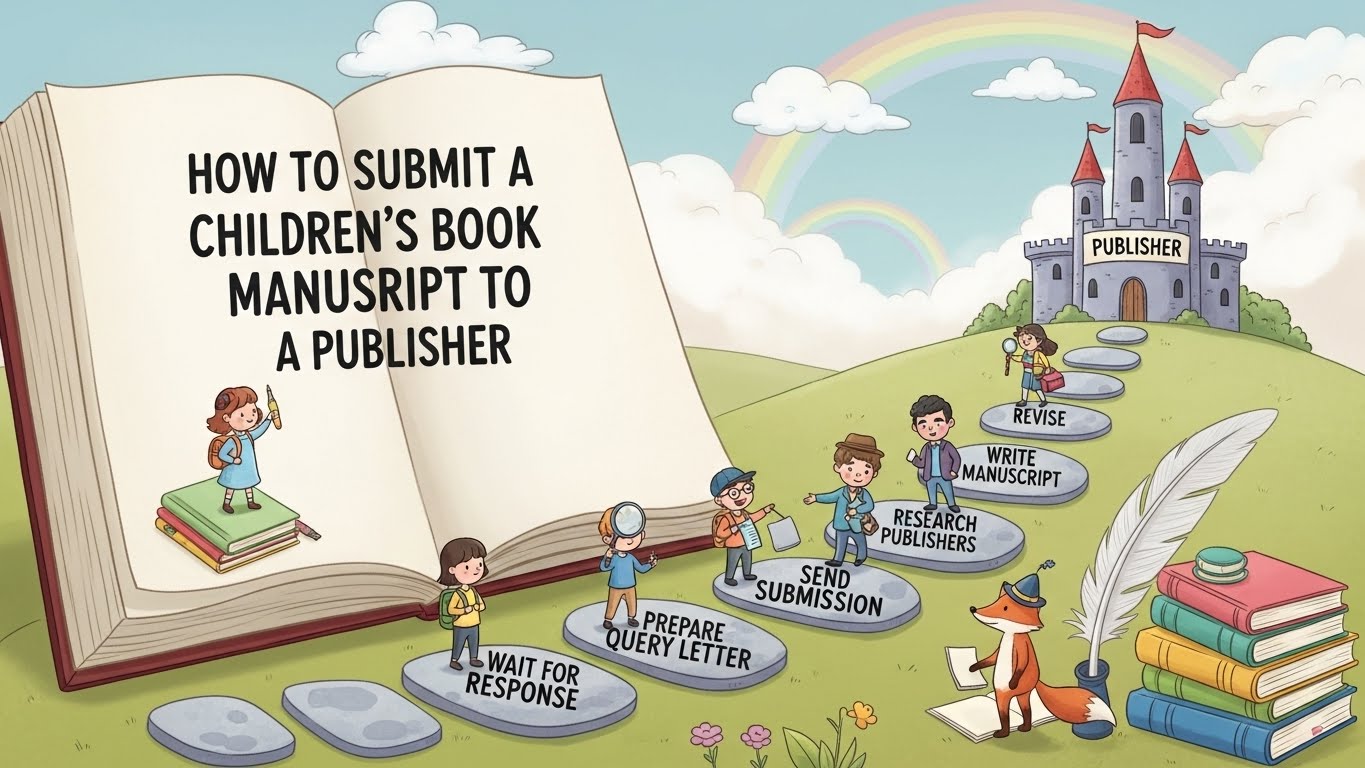
Submitting a children’s book manuscript to a publisher can feel both exciting and intimidating. You may have spent months—or even years—developing your story, refining your characters, and imagining children discovering your book for the first time. Yet when it comes to actually submitting your manuscript, many writers feel unsure where to start, what publishers expect, and how to avoid common mistakes. The children’s publishing industry operates differently from adult publishing. Manuscripts are often shorter, competition is intense, and submission rules can vary widely depending on the publisher, book format, and age group.
This comprehensive guide walks you through the entire submission journey, from preparing your manuscript to choosing the right publishers, writing a professional cover letter, and navigating responses. If you’re also exploring which publishers accept work directly without agents, you may find it helpful to revisit our previous blog on How To Get a Book Published Without an Agent which explains how unagented authors can successfully approach publishers.
Understanding the Children’s Publishing Landscape
Before submitting your manuscript, it’s important to understand how children’s publishing works. Children’s books are generally categorized by age group, and publishers acquire manuscripts based on these categories. Submitting the wrong type of manuscript to the wrong publisher is one of the most common reasons for rejection. Children’s publishing is also highly visual, particularly for younger age groups. Even if you are not an illustrator, publishers will consider how your story translates visually.
Identify Your Children’s Book Category First
One of the most critical steps before submission is clearly identifying your book’s category.
Picture Books
Picture books are typically written for children aged 3–7 and are usually under 1,000 words. Publishers look for:
- Strong emotional arcs
- Simple but powerful language
- Stories that invite illustration
Board Books
Board books target babies and toddlers. Manuscripts are very short and focus on:
- Concepts (colors, numbers, routines)
- Rhythm and repetition
- Visual interaction
Early Readers
Early readers are designed for children learning to read independently. These manuscripts require:
- Controlled vocabulary
- Short sentences
- Clear story progression
Middle Grade
Middle grade books are longer and more complex, aimed at readers aged 8–12. They focus heavily on:
- Character development
- Plot structure
- Age-appropriate themes
Knowing where your book fits determines everything that follows.
Polish Your Manuscript Before Submission
Children’s book publishers expect submissions to be professionally prepared.
Edit Ruthlessly
Before submitting, revise your manuscript multiple times. Focus on:
- Clarity and pacing
- Age-appropriate language
- Emotional impact
Children’s manuscripts must be tight—every word counts.
Seek Feedback
Beta readers, critique groups, and professional editors can help identify weaknesses. Honest feedback before submission can save you from rejection later.
Avoid Overwriting
Children’s publishers value simplicity. Resist the urge to explain everything. Leave space for illustrations and the reader’s imagination.
Research Children’s Book Publishers Carefully
Not all publishers accept unsolicited manuscripts, and not all publishers publish the same types of children’s books.
Look for Publishers Accepting Submissions
Focus on publishers who:
- Explicitly state they accept submissions
- Publish books similar to yours
- Are open to unagented authors
Our previous blog on book publishers accepting submissions without agents explains how to identify these publishers and evaluate their credibility (internal reference).
Study Their Catalog
Reading books a publisher has already released helps you:
- Understand their tone and style
- Identify gaps your book might fill
- Avoid submitting unsuitable manuscripts
Follow Submission Guidelines Exactly
Submission guidelines are not suggestions—they are requirements.
Common Submission Requirements
Publishers may ask for:
- Full manuscript or sample chapters
- A brief synopsis
- A cover letter
- Formatting in Word or PDF
Failure to follow instructions often results in automatic rejection.
Formatting Your Manuscript
While guidelines vary, most children’s publishers prefer:
- Double-spaced text
- Standard fonts like Times New Roman
- Clear page numbering
For picture books, do not include illustration notes unless necessary.
Writing a Strong Cover Letter for Children’s Publishers
Your cover letter introduces you and your manuscript. It should be short, professional, and confident.
What to Include
A strong cover letter usually contains:
- The title, genre, and word count of your book
- A concise summary of the story
- Why you chose this publisher
- A brief author bio
Avoid exaggeration or comparisons to famous books.
Should You Submit to Publishers or Agents First?
This is a major decision for children’s authors.
Submitting Directly to Publishers
Many children’s book publishers accept direct submissions, especially:
- Small and independent presses
- Picture book publishers
- Educational publishers
Direct submission allows faster access but fewer negotiation protections.
Submitting Through Literary Agents
Agents can:
- Help refine your manuscript
- Submit to major publishers
- Negotiate contracts
However, agents are highly selective. Many authors begin by submitting directly.
Submitting Picture Book Manuscripts: Special Considerations
Picture books require a slightly different approach.
Do Not Over-Describe Illustrations
Publishers prefer to match manuscripts with illustrators. Let the art director do their job.
Page Breaks Are Optional
Some publishers allow page breaks, but many prefer continuous text.
Keep Word Count Low
Most picture book manuscripts fall between 300 and 700 words.
Digital vs Postal Submissions
Most children’s publishers now accept digital submissions.
Email Submissions
Follow file naming instructions carefully and keep your email concise.
Online Submission Forms
These forms may limit word counts or attachments. Prepare your materials in advance.
Postal Submissions
Rare today, but still used by a few publishers. Always include a self-addressed envelope if requested.
What Happens After You Submit?
Once your manuscript is submitted, patience becomes essential.
Response Times
Children’s publishers typically respond within:
- 6 to 12 weeks
- Sometimes longer for larger publishers
Some publishers only respond if interested.
Rejections Are Normal
Even strong manuscripts receive multiple rejections. Rejection does not necessarily reflect quality.
When and How to Follow Up
Only follow up if:
- The publisher’s guidelines allow it
- The stated response time has passed
Keep follow-up emails polite and brief.
Common Mistakes to Avoid When Submitting
Avoiding these mistakes can significantly improve your chances.
- Submitting to the wrong age category
- Ignoring submission guidelines
- Sending unedited manuscripts
- Including excessive illustration notes
- Submitting to too many publishers at once
Professionalism matters at every stage.
Building a Submission Strategy
Successful authors approach submissions strategically.
Track Your Submissions
Maintain a spreadsheet with:
- Publisher names
- Submission dates
- Responses
Submit in Batches
Submit to a few publishers at a time rather than all at once.
Revise Between Rounds
If you receive consistent feedback, revise before submitting again.
Traditional Publishing vs Self-Publishing for Children’s Books
While this guide focuses on traditional publishing, it’s worth understanding your options.
Traditional Publishing
- Professional editing and illustration
- Established distribution
- Industry credibility
Self-Publishing
- Creative control
- Higher upfront costs
- Marketing responsibility
Many authors pursue traditional publishing first.
Long-Term Success in Children’s Publishing
Submitting one manuscript is only the beginning.
Long-term success comes from:
- Writing consistently
- Learning from rejections
- Building industry knowledge
- Staying persistent
Many published children’s authors faced years of rejection before success.
Final Thoughts
Submitting a children’s book manuscript to a publisher is a process that requires preparation, patience, and resilience. Understanding the market, refining your manuscript, and targeting the right publishers dramatically increase your chances of success. Whether you are submitting your first picture book or a middle-grade novel, approaching the process professionally can set you apart. Each submission builds experience, and every rejection brings you closer to the right opportunity.
Frequently Asked Questions (FAQs)
1. Can I submit a children’s book manuscript without an agent?
Yes. Many children’s publishers accept unagented submissions, especially smaller and independent presses.
2. How long should a children’s book manuscript be?
It depends on the age group. Picture books are usually under 1,000 words, while middle-grade books are much longer.
3. Do I need illustrations before submitting?
No. Most publishers prefer manuscripts only and will hire an illustrator separately.
4. How many publishers should I submit to at once?
Submitting to 5–10 publishers in a batch is common, but always check exclusivity rules.
5. What should I do if my manuscript is rejected?
Revise if needed, research new publishers, and continue submitting. Rejection is part of the process.


